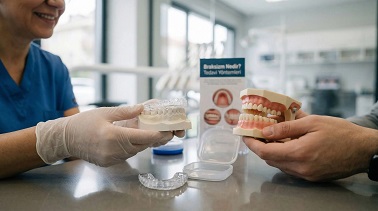
Teeth grinding (bruxism) is the involuntary clenching or grinding of teeth. It usually occurs during sleep but can also happen during the day. Treatment is planned according to the cause and severity of the problem. The contents of teeth grinding treatment are explained in detail below.
What is Teeth Grinding (Bruxism)?
Bruxism is the involuntary contraction of the jaw muscles, causing the teeth to press against each other.
Most common symptoms:
Jaw pain in the morning
Head and temple pain
Tooth wear or breakage
Tooth sensitivity
Clicking or locking in the jaw joint
Teeth grinding sound while sleeping
Bruxism Treatment (Teeth Grinding Treatment)
1️⃣ Night Guard (Splint) Treatment
This is the most common and preferred treatment.
How is it done?
An impression of the patient's teeth is taken.
A custom-made transparent splint is prepared in the laboratory.
The patient wears the splint while sleeping at night.
Function
Prevents teeth from rubbing against each other
Reduces excessive activity of jaw muscles
Prevents tooth wear
Features
Can be made of hard acrylic or soft material
Average lifespan: 2-5 years
2️⃣ Botox Treatment
It is done to reduce the overactivity of the jaw muscles.
Procedure used
Masseter Botox
How is it applied?
Botulinum toxin is injected into the masseter muscle, which is the chewing muscle.
The procedure takes approximately 10-15 minutes.
Effects
Reduces the strength of the jaw muscles
Reduces the force of teeth grinding
Reduces jaw pain
Duration of effect
Average 4-6 months
3️⃣ Orthodontic Treatment
Applied if malocclusion of the teeth causes bruxism.
Contents
The alignment of the teeth is corrected
Jaw closure is regulated
Methods
Braces
Clear aligner treatment
Goal: To balance the load on the jaw.
4️⃣ Temporomandibular Joint Treatments
When bruxism progresses, the temporomandibular joint can be affected.
Related disease
Temporomandibular Joint Disorder (TMJ disorder)
Treatment methods
Physical therapy exercises
Jaw muscle relaxation techniques
Joint injections in advanced cases
5️⃣ Behavioral and Psychological Treatment
One of the most important causes of teeth grinding is stress and anxiety.
Applications
Stress management
Improving sleep patterns
Psychological counseling
Supportive methods
Meditation
Breathing exercises
Sports
6️⃣ Medication Treatment
In some cases, it may be administered under the supervision of a doctor.
Medications used:
Muscle relaxants
Antidepressants
Painkillers
This treatment is generally used for short-term support.
7️⃣ Physical Therapy and Exercise
Applied to relax the jaw muscles.
Example exercises
Jaw opening and closing exercises
Lateral movement exercises
Massage applications
Purpose: To reduce excessive contraction of the jaw muscles.
🧠 Causes of Teeth Grinding
Stress and anxiety
Sleep disorders
Tooth bite problems
Temporomandibular joint disorders
Certain medications
✅ Treatment plan is usually a combination. The most common method:
Night guard + Botox + stress management